
Veneers give joinery its character. Here is how species, cut and finish change the look and performance of doors, panels and cabinetry.
Wood veneer allows a consistent, premium surface across large areas of joinery — doors, wall panels, wardrobes and cabinetry — while using timber efficiently. Choosing the right veneer is one of the most important early decisions in an interior.
1. Start with the species
Oak, walnut, ash and teak each bring a different tone and grain. Light species open up smaller rooms, while darker walnut or smoked oak create a warm, enclosed atmosphere suited to lounges, studies and hospitality spaces.
2. Understand the cut
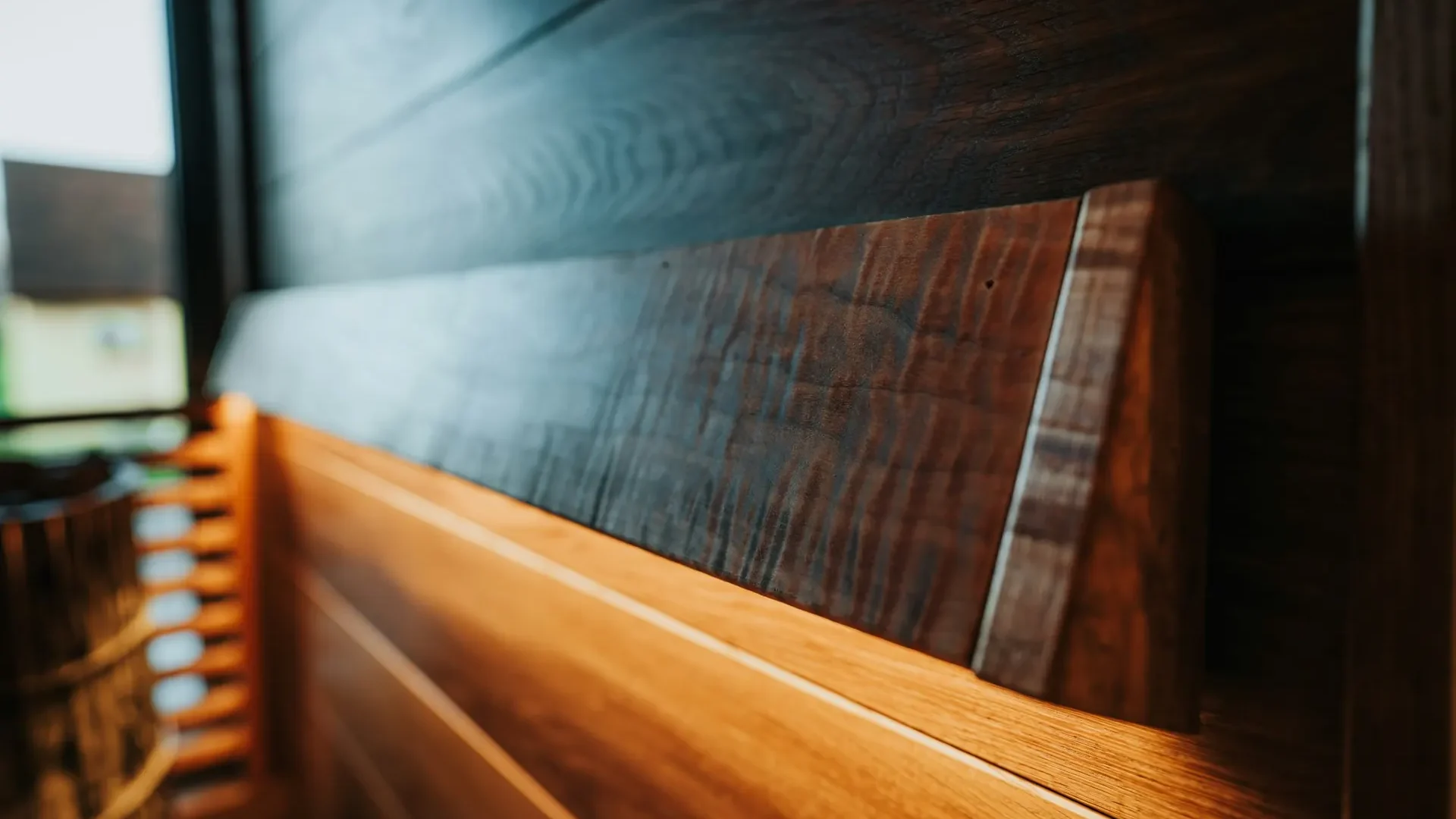
The way the log is sliced changes the pattern dramatically:
- Crown cut shows the classic cathedral pattern.
- Quarter cut gives straight, linear grain — ideal for contemporary interiors.
- Rift cut produces a very calm, uniform look.
3. Plan the matching
Book-matched, slip-matched and sequence-matched panels each read differently on a wall. For feature walls and full-height doors, sequence-matching keeps the grain flowing from one panel to the next.
4. Choose the finish
Matt lacquers keep the natural feel of the timber, while satin or high-gloss finishes add depth. In bathrooms and kitchens, the finish system and the substrate beneath it matter as much as the veneer itself.
The best results come from agreeing samples early and reviewing them in the actual lighting of the space.
If you are planning a joinery package, our team can help you compare samples and finishes against your design intent.
Talk to our team about materials, detailing and manufacturing.